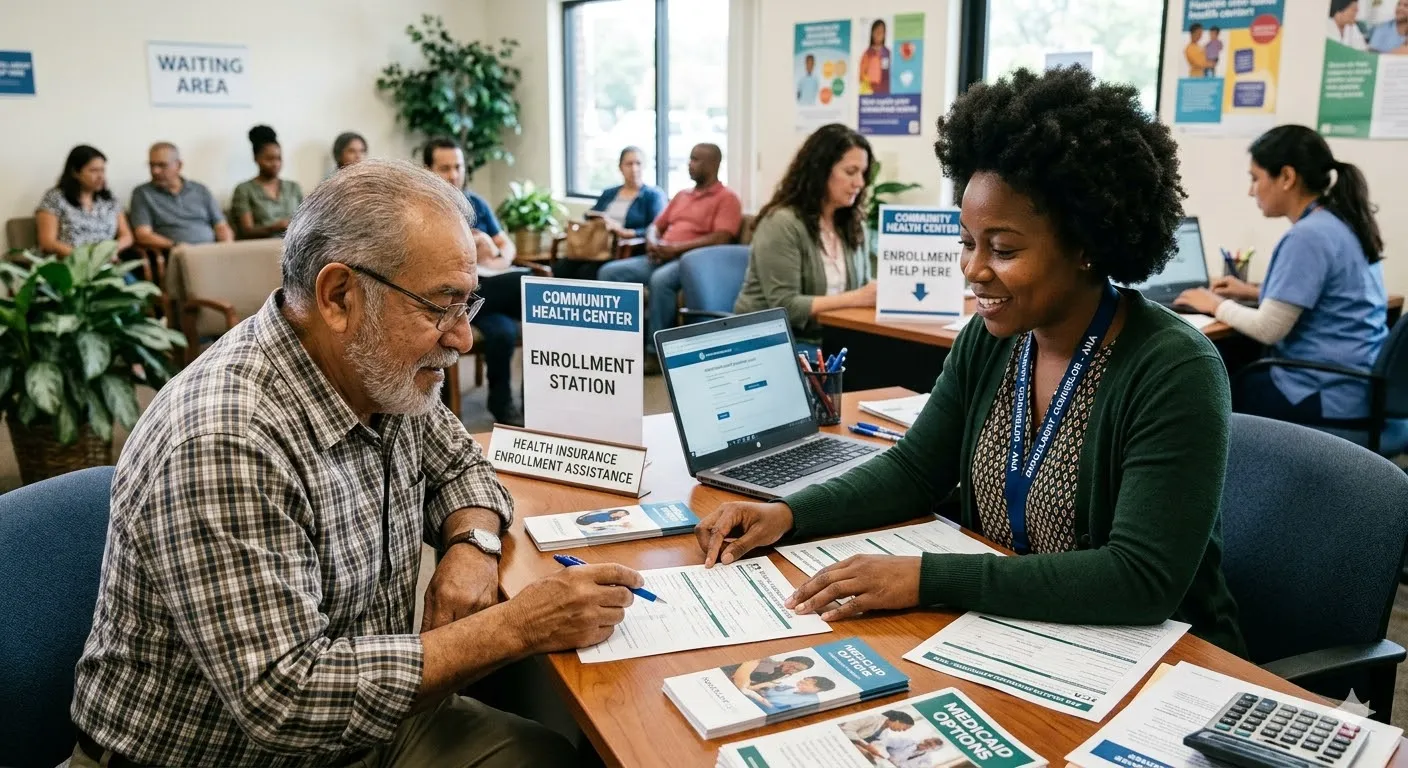

State health insurance programs play an important role in helping residents access healthcare coverage, especially for individuals with limited income, older adults, and families who may not qualify for employer-sponsored plans. While federal programs such as Medicare and Medicaid receive significant attention, state-based health insurance initiatives often serve as the bridge that connects residents to affordable coverage and guidance.
Each U.S. state manages its own health insurance support systems within federal guidelines. These programs can include marketplace coverage assistance, Medicaid administration, consumer protection services, and counseling programs that help people compare available plans.
Understanding how these programs operate can make a meaningful difference when choosing coverage.
What State Health Insurance Programs Actually Do

State health insurance programs generally focus on improving access to healthcare coverage and helping residents understand their options. While the structure differs by state, the core responsibilities often remain consistent.
Common services include:
- Administering Medicaid programs
- Overseeing state health insurance marketplaces
- Providing enrollment assistance
- Offering consumer protection against unfair insurance practices
- Educating residents about Medicare and private plan options
Many states also operate counseling programs designed specifically for older adults. These programs provide unbiased information about Medicare plans, prescription coverage, and supplemental policies.
The goal is not to sell insurance. Instead, these services guide residents through complex decisions.
Types of State Health Insurance Support
State health insurance assistance generally falls into several categories depending on the population served.
| Program Type | Who It Helps | Typical Services | Key Considerations |
|---|---|---|---|
| Medicaid Programs | Low income individuals and families | Hospital care, doctor visits, preventive services | Eligibility varies by state income rules |
| State Marketplaces | Individuals without employer coverage | Plan comparison and enrollment | Premium subsidies may apply |
| State Health Insurance Assistance Programs | Medicare beneficiaries | Counseling and plan comparisons | Free and unbiased guidance |
| Children’s Health Insurance Programs | Families with moderate income | Pediatric care and preventive services | Eligibility depends on family income |
These programs often work together to ensure that residents can find an appropriate level of coverage.
Pro Insight
Many residents only look at health insurance options during open enrollment periods. However, life events such as moving, losing employer coverage, or changes in household income may create special enrollment opportunities.
Understanding these qualifying events can allow people to access coverage outside the traditional enrollment window.
State Health Insurance Marketplaces Explained

State health insurance marketplaces were established to help individuals and families compare health plans in a more transparent environment. Some states operate their own exchanges, while others rely on the federal marketplace platform.
These marketplaces allow users to:
- Compare premiums across multiple insurers
- Review coverage details and deductibles
- Determine eligibility for tax credits or subsidies
- Enroll in individual or family health plans
For example, a freelance graphic designer without employer-sponsored benefits may use a state marketplace to compare available coverage options. Based on income, the individual might qualify for financial assistance that reduces monthly premiums.
Marketplaces are designed to simplify a process that historically required navigating multiple insurance providers individually.
Quick Tip
Before selecting a health insurance plan, review both the monthly premium and the total potential out-of-pocket costs. Lower premiums sometimes come with higher deductibles or narrower provider networks.
Balancing both factors often leads to a more realistic understanding of overall healthcare costs.
Consumer Protection and Insurance Oversight
State insurance departments also play a regulatory role. These agencies monitor insurers, enforce state insurance laws, and investigate consumer complaints related to coverage or claims.
Oversight can include:
- Reviewing insurance rate increases
- Ensuring policy transparency
- Enforcing fair claims practices
- Protecting residents from fraudulent insurance activity
This regulatory structure helps maintain trust in the insurance marketplace and ensures that companies follow established standards.
A Real-World Scenario
Consider a part-time retail worker who recently lost employer-sponsored coverage after a schedule change. Without guidance, navigating individual insurance plans could be overwhelming.
By contacting a state health insurance assistance office, the worker receives help reviewing marketplace plans and determining eligibility for subsidies. Within a short time, the worker enrolls in a plan that keeps their primary doctor within the network while maintaining manageable monthly premiums.
Situations like this highlight how state programs often provide practical support beyond simple enrollment.

Frequently Asked Questions
What is a state health insurance assistance program
A state health insurance assistance program provides free counseling to help residents understand Medicare and other healthcare coverage options.
Are state health insurance programs the same in every state
No. While many programs follow similar federal guidelines, each state administers its own system and may offer different services or eligibility requirements.
Who qualifies for state health insurance assistance
Eligibility depends on the program. Some services are available to all residents, while others focus on Medicare beneficiaries, low-income families, or children.
Can these programs help with Medicare decisions
Yes. Many state programs provide counselors who help residents compare Medicare Advantage, prescription drug plans, and supplemental coverage.
Do residents have to pay for counseling services
Most state health insurance assistance counseling services are free and funded through federal and state partnerships.
Conclusion
State health insurance programs serve as a vital support system within the broader U.S. healthcare landscape. By administering Medicaid, overseeing insurance marketplaces, and providing unbiased counseling services, these programs help residents make informed decisions about healthcare coverage.
For individuals navigating complex insurance options, these state resources often provide clarity and practical guidance that would otherwise be difficult to obtain.
https://www.healthcare.gov
https://www.cms.gov
https://www.medicaid.gov
https://www.usa.gov/health-insurance
This article is for general informational purposes only and does not provide legal, financial, medical, or professional advice. Policies, rates, and regulations may change over time.