

No fault insurance in New York is a core part of the state’s auto insurance system. It determines how medical expenses and certain financial losses are handled after a car accident, regardless of who caused the incident.
For drivers, this system is designed to simplify claims and ensure faster access to benefits. Instead of waiting for fault to be determined, each driver’s own insurance policy helps cover immediate costs.
Understanding how no fault insurance works in New York can help drivers navigate claims and choose appropriate coverage.
What No Fault Insurance Means in New York
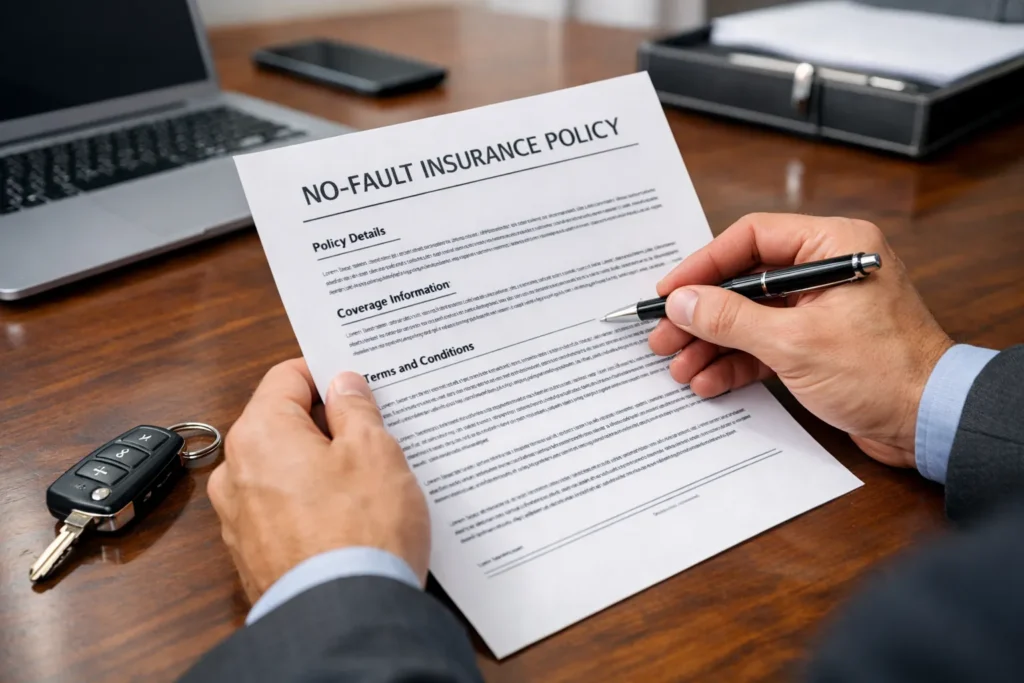
No fault insurance, also known as Personal Injury Protection (PIP), requires drivers to rely on their own insurance coverage for certain accident-related expenses.
This system applies regardless of who is responsible for the accident.
In New York, no fault insurance typically covers:
- Medical expenses related to injuries
- Lost wages due to inability to work
- Certain out-of-pocket costs such as transportation to medical appointments
The goal is to provide quick financial support without the need for lengthy legal processes.
Minimum No Fault Coverage Requirements
New York law requires all drivers to carry a minimum level of no fault coverage as part of their auto insurance policy.
| Coverage Type | Minimum Requirement |
|---|---|
| Personal Injury Protection (PIP) | $50,000 per person |
| Lost Wages Coverage | Up to a percentage of income (within limits) |
| Medical Expenses | Included within PIP limit |
| Essential Services | Limited reimbursement |
The $50,000 PIP limit is the standard baseline, though some drivers choose higher limits for additional protection.
This coverage applies to the driver, passengers, and sometimes pedestrians involved in an accident.
What No Fault Insurance Covers and Does Not Cover
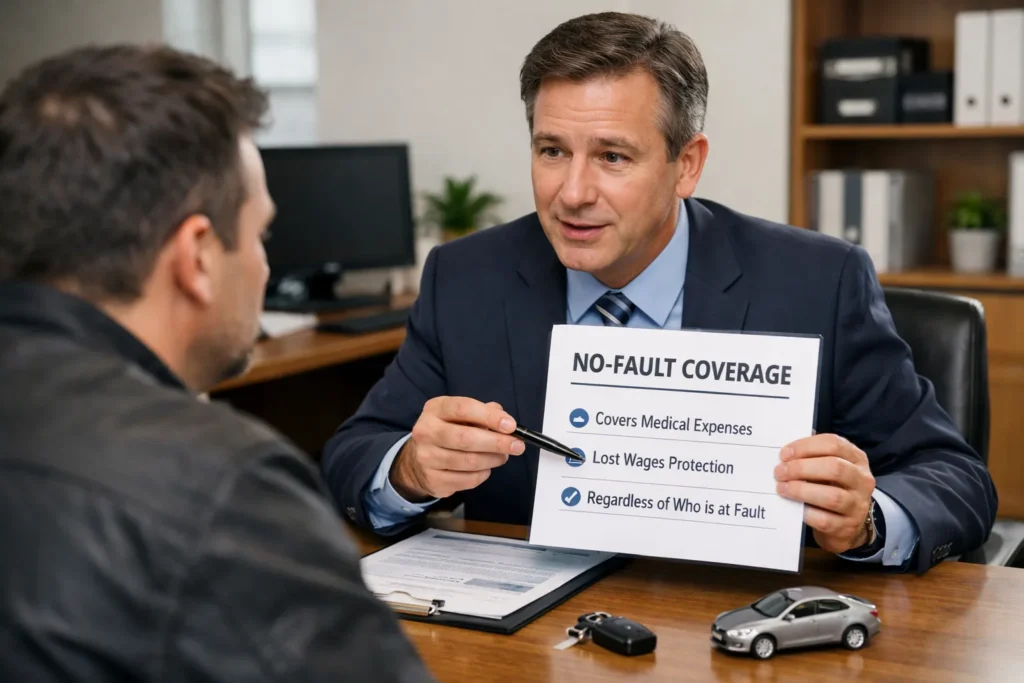
While no fault insurance provides important benefits, it does not cover every type of loss.
Covered:
- Medical treatment and rehabilitation
- Partial lost income
- Certain necessary expenses related to recovery
Not Covered:
- Damage to your vehicle
- Damage to other vehicles or property
- Pain and suffering (except in serious injury cases)
Vehicle repairs are handled through separate coverage, such as collision insurance.
Understanding these distinctions helps avoid confusion after an accident.
How No Fault Insurance Works After an Accident
After an accident in New York, drivers typically file a claim with their own insurance company rather than the other party’s insurer.
This process generally includes:
- Reporting the accident promptly
- Submitting medical documentation
- Filing a no fault claim within required time limits
- Receiving benefits for covered expenses
Because fault does not need to be established for basic claims, the process can move more quickly compared with traditional liability systems.
However, in cases involving serious injuries, legal claims against the at-fault driver may still be possible.
Pro Insight
Insurance professionals often recommend reviewing your PIP coverage limits carefully. While the minimum requirement provides basic protection, higher limits may help cover additional medical or recovery expenses, especially in more serious accidents.
Adjusting coverage limits can provide added financial flexibility without significantly increasing premiums.
When You Can Step Outside the No Fault System
New York allows certain exceptions where injured parties may pursue legal action against the at-fault driver.
This typically applies when injuries meet the state’s definition of a serious injury, which may include:
- Significant disfigurement
- Fractures
- Permanent limitation of body function
- Long-term disability
In these situations, individuals may seek compensation beyond what no fault coverage provides.
Quick Tip
If you are involved in an accident, file your no fault claim as soon as possible. New York has strict deadlines for submitting claims, and delays may affect eligibility for benefits.

Frequently Asked Questions
Is no fault insurance required in New York?
Yes. All drivers must carry Personal Injury Protection as part of their auto insurance policy.
Does no fault insurance cover car repairs?
No. It only covers medical expenses and related costs. Vehicle repairs require separate coverage.
Do you need to prove fault to receive benefits?
No. Benefits are paid through your own insurance regardless of who caused the accident.
Can you sue another driver in New York?
In certain cases involving serious injuries, you may be able to pursue legal action outside the no fault system.
How much PIP coverage is required?
New York requires a minimum of $50,000 per person in Personal Injury Protection coverage.
Conclusion
No fault insurance in New York is designed to provide quick access to medical and financial support after an accident without requiring fault to be determined first. By relying on Personal Injury Protection, drivers can receive benefits more efficiently.
However, understanding what is covered—and what is not—is essential for making informed decisions about overall insurance coverage.
By reviewing policy limits and knowing how the system works, drivers can better prepare for unexpected situations on the road.
Trusted U.S. Resources
https://www.dfs.ny.gov
https://www.dmv.ny.gov
https://www.usa.gov
https://www.consumerfinance.gov
This article is for general informational purposes only and does not provide legal, financial, medical, or professional advice. Policies, rates, and regulations may change over time.