
An ITIN mortgage makes homeownership possible for many people who live and work in the United States but don’t have a Social Security number. Instead of relying on SSNs, these mortgages use an Individual Taxpayer Identification Number (ITIN) to evaluate eligibility.
In 2025, ITIN mortgages continue to be an important option for foreign nationals, undocumented immigrants, and certain visa holders who want to buy property while building long-term stability in the U.S.
Disclaimer: This article is for educational purposes only and does not provide legal, tax, or mortgage advice. Loan availability, terms, and eligibility vary by lender and individual circumstances.
What an ITIN mortgage really is
An ITIN mortgage is a home loan designed for borrowers who file U.S. taxes using an ITIN instead of a Social Security number. The loan itself is a standard mortgage, but the qualification process is adjusted to reflect alternative documentation.
Lenders focus on income stability, credit behavior, and financial responsibility rather than citizenship status.
For example, a self-employed contractor who files taxes with an ITIN may qualify for a mortgage by showing consistent income and responsible payment history.
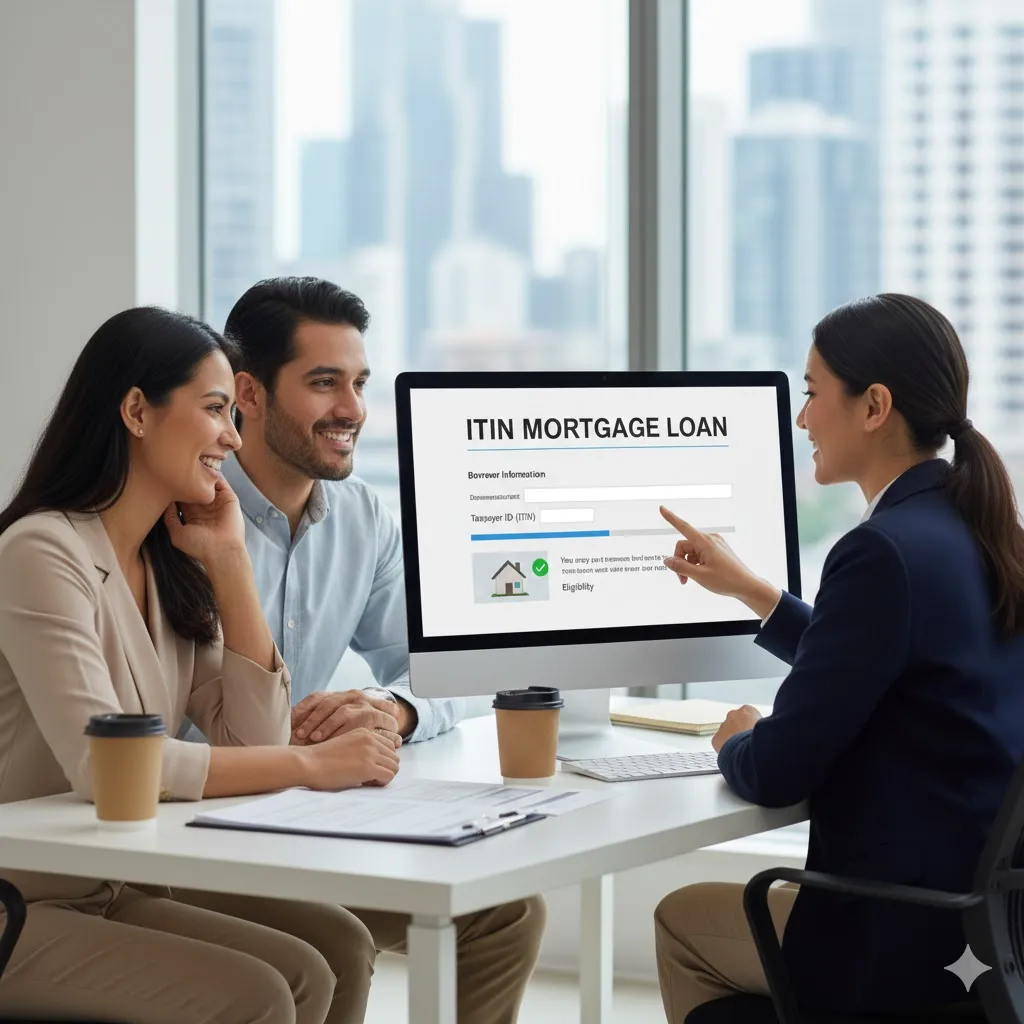
Who typically qualifies for an ITIN mortgage
ITIN mortgages are commonly used by:
- Foreign nationals working in the U.S.
- Undocumented residents who file taxes
- Visa holders without SSNs
- Self-employed individuals using an ITIN
While requirements vary, most lenders look for:
- A valid ITIN issued by the IRS
- Proof of income and tax filings
- A history of on-time payments
- A reasonable down payment
Qualification is based more on financial behavior than immigration status.
ITIN mortgage vs conventional mortgage
Understanding the differences helps set expectations.
| Feature | ITIN Mortgage | Conventional Mortgage |
|---|---|---|
| Social Security number | Not required | Required |
| Credit evaluation | Alternative credit accepted | Traditional credit score |
| Down payment | Often higher | Often lower |
| Interest rates | May be higher | Typically lower |
| Lender availability | Limited | Widely available |
Despite these differences, many borrowers successfully refinance into conventional loans later if they become eligible.
Pro Insight: Filing taxes consistently with an ITIN strengthens mortgage eligibility more than income alone.
Documents commonly required
ITIN mortgage applications often require more documentation to offset limited credit data.
Commonly requested items include:
- ITIN letter from the IRS
- Recent tax returns
- Proof of income (pay stubs or bank statements)
- Utility bills or rental payment history
- Government-issued photo ID
Providing organized and consistent records can significantly improve the review process.
Quick Tip: Keeping clear tax and payment records year-round makes mortgage preparation much easier.
Benefits and challenges of ITIN mortgages
ITIN mortgages open doors to homeownership, allowing families to build equity instead of renting long term. They also encourage formal financial participation, such as tax filing and banking.
However, challenges may include higher down payments, fewer lender choices, and stricter verification requirements.
A realistic scenario: a family uses an ITIN mortgage to purchase a first home, then refinances later when financial circumstances improve.
Is an ITIN mortgage right for you?
An ITIN mortgage may be a good fit if you have stable income, file U.S. taxes regularly, and plan to stay in the U.S. long term. It may be less suitable for short-term residents or those without documented income.
Understanding both the opportunity and responsibility helps borrowers approach the process confidently.
Frequently asked questions about ITIN mortgages
Do ITIN mortgages require legal residency?
No. Legal residency is not always required, but tax compliance is essential.
Can ITIN borrowers build credit?
Yes. Many build credit through alternative credit reporting and on-time payments.
Are interest rates higher on ITIN mortgages?
They can be, due to higher lender risk and limited programs.
Can an ITIN mortgage be refinanced later?
In some cases, yes—especially if eligibility for conventional loans improves.
Are ITIN mortgages available in all states?
Availability varies by lender and state regulations.
Trusted U.S. sources for further reading
- Internal Revenue Service (IRS) – https://www.irs.gov
- Consumer Financial Protection Bureau (CFPB) – https://www.consumerfinance.gov
- U.S. Department of Housing and Urban Development (HUD) – https://www.hud.gov
- Federal Housing Finance Agency (FHFA) – https://www.fhfa.gov